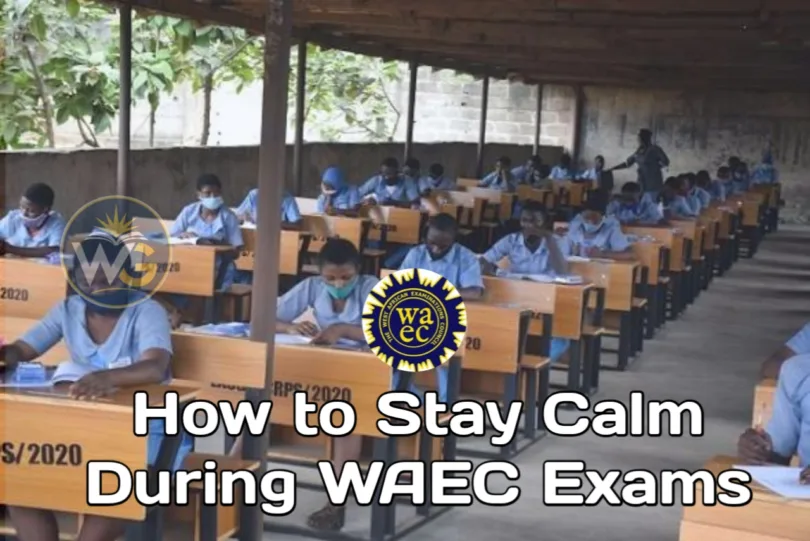

How to Stay Calm During WAEC Exams: Sitting for the West African Examinations Council (WAEC) examination can be an exciting but stressful experience for many students. Even candidates who have prepared properly may become nervous when they enter the examination hall.
A certain amount of nervousness is normal. However, excessive fear can make it difficult to concentrate, remember information and manage examination time effectively.
Learning how to stay calm during WAEC exams can therefore be just as important as studying the syllabus. A calm candidate is more likely to read questions carefully, organise answers properly and make sensible decisions when faced with difficult questions.
The good news is that examination anxiety can be managed. Preparing early, practising under examination conditions, getting enough rest and using simple calming techniques can help you feel more confident.
How to Stay Calm During WAEC Exams
Understand That Some Nervousness Is Normal
Feeling nervous before an important examination does not automatically mean you are unprepared.
You may notice that your heart beats faster, your hands feel slightly sweaty or you become more alert.
These reactions can happen when you are under pressure.
Instead of interpreting every nervous feeling as a sign that you will fail, remind yourself that some anxiety is normal.
The goal is not necessarily to eliminate every nervous feeling. The goal is to prevent anxiety from becoming overwhelming.
Prepare Early
One of the best ways to reduce examination anxiety is to prepare before the examination becomes close.
When you know that you have studied the syllabus, practised questions and revised difficult topics, you are more likely to feel confident.
Last-minute preparation can increase stress because you may constantly worry about unfinished topics.
Create a study plan early and gradually work through your subjects.
Know Your Examination Timetable
Do not wait until the morning of an examination to discover when or where you are expected to report.
Check your examination timetable carefully.
Know:
- The subject you are writing.
- The date.
- The expected time.
- Your examination venue.
- Any relevant instructions.
Knowing these details can prevent unnecessary panic.
Prepare Your Materials Early
Organise the materials you are permitted to take to the examination according to the instructions provided by your school and examination authorities.
Do this before examination morning.
When everything is ready, you will have fewer things to worry about.
Get Enough Sleep
Lack of sleep can make stress feel worse.
Some students believe that staying awake all night before an examination will help them remember more.
However, excessive sleep deprivation can leave you tired and unable to concentrate properly.
Try to maintain a reasonable sleep schedule, particularly during the final days of preparation.
Eat Properly
Do not skip meals simply because you are nervous.
A normal, balanced meal can help you maintain your energy.
Avoid experimenting with unfamiliar foods immediately before an examination.
Also stay hydrated.
Arrive Early
Arriving late can increase anxiety before the examination has even started.
Plan your journey and allow enough time for unexpected delays.
Getting to the venue early gives you an opportunity to settle down before the examination begins.
Avoid Last-Minute Rumours
Students may gather before an examination and start discussing supposed questions, leaked papers or predictions.
These conversations can increase anxiety.
Do not allow rumours to determine your emotional state.
Focus on your preparation and follow legitimate examination procedures.
Take Slow, Controlled Breaths
If you begin feeling anxious, slow down your breathing.
Take a gentle breath in, then slowly breathe out.
Repeat this several times.
The purpose is to give yourself a brief moment to settle and refocus.
Relax Your Shoulders
Anxiety can cause you to tense your muscles without realising it.
If you notice your shoulders becoming stiff, relax them.
Unclench your jaw and loosen your hands.
Small physical adjustments can help you feel more comfortable.
Avoid Comparing Yourself With Other Candidates
Some students may appear extremely confident before an examination.
Others may claim they have studied everything.
Do not allow their behaviour to determine how you feel.
Someone looking confident does not necessarily mean they are better prepared.
Focus on your own examination.
Stop Thinking About Failure
Repeatedly thinking, “What if I fail?” can increase anxiety without improving your performance.
Replace the thought with a practical question:
“What can I do right now to answer this examination as well as possible?”
Focus on the task in front of you.
Use Positive but Realistic Self-Talk
You can remind yourself:
“I have prepared for this.”
“I will take the questions one at a time.”
“I do not need to know everything immediately.”
“I can remain calm and think carefully.”
The goal is not to convince yourself that every question will be easy. It is to remind yourself that you can respond to challenges calmly.
Read the Instructions Carefully
When the examination starts, do not rush because you are nervous.
Read the instructions carefully.
Understand:
- What questions you are required to answer.
- Which sections are compulsory.
- How much time you have.
- Any specific instructions on the paper.
Understanding the requirements can prevent avoidable mistakes.
Take a Moment Before Starting
If permitted by the examination instructions, take a brief moment to settle yourself before beginning.
Look at the paper calmly and organise your thoughts.
There is no advantage in rushing into the first question simply because you are nervous.
Start With Questions You Understand
Where the examination format permits you to choose the order of questions, consider starting with questions you understand.
This can help you secure marks and build confidence.
You can return to more difficult questions later.
Do Not Panic When You See a Difficult Question
Almost every examination can contain questions that seem difficult.
Seeing one difficult question does not mean the entire paper is difficult.
Do not allow one question to determine how you approach the rest of the examination.
Move on when appropriate and return to the difficult question later.
Manage Your Time
Poor time management can increase anxiety.
If you spend too much time on one question, you may start worrying about the questions you have not answered.
Divide your time sensibly.
Keep an eye on the clock without constantly checking it.
Read Each Question Carefully
Anxiety can make students rush.
Rushing can cause you to misunderstand questions that you actually know how to answer.
Read carefully and identify exactly what the question requires.
Pay attention to words such as:
- Define.
- State.
- Explain.
- Describe.
- Discuss.
- Compare.
- Calculate.
- List.
Do Not Rush Your Answers
Speed is useful, but careless speed can result in avoidable errors.
Write clearly and organise your answers.
For calculation-based questions, show relevant working where appropriate.
What to Do When You Forget an Answer
Sometimes students suddenly feel as though they have forgotten everything.
This can happen because of stress.
If you forget an answer, do not immediately assume that the information is gone permanently.
Take a moment, breathe slowly and move to another question if appropriate.
As you continue answering other questions, the information may come back to you.
Use the Questions to Trigger Your Memory
Sometimes reading another question can remind you of information related to a previous question.
If you cannot remember something immediately, continue with questions you can answer.
Return to the earlier question later.
Do Not Spend Too Long on One Question
A difficult question can become a time trap.
If you have spent too long without making progress, move on where the examination instructions allow it.
You can return later if you have time.
Focus on What You Can Control
You cannot control which questions appear.
You cannot control how quickly another student finishes.
You can control:
- Your preparation.
- Your breathing.
- Your reading.
- Your time management.
- Your answers.
- Your response to difficult questions.
Concentrating on these things can reduce unnecessary worry.
Avoid Looking Around the Examination Hall
Constantly checking what other candidates are doing can make you nervous.
Someone writing quickly may not necessarily be answering correctly.
Someone still reading may simply be working at a different pace.
Focus on your own paper.
Do Not Let One Mistake Ruin the Examination
Making a mistake does not mean you have failed the entire examination.
If you realise that you made an error, correct it where possible and continue.
Do not spend the next 30 minutes mentally replaying what happened.
Stay Calm During Practical Examinations
Practical examinations can create additional pressure because students may be unfamiliar with equipment or specimens.
Before beginning, carefully read the instructions.
Pay attention to measurements, observations, diagrams and safety requirements relevant to the practical.
Work methodically rather than rushing.
Practise Examination Conditions Before WAEC
One of the best ways to reduce anxiety is to make the examination environment less unfamiliar.
Take timed practice tests.
Sit somewhere quiet, set a timer and attempt questions without checking your notes.
This helps you become familiar with the pressure of working within a limited period.
Use Past Questions to Build Confidence
Past questions can help you understand how examination questions are presented.
When you practise repeatedly, you may become more comfortable with answering questions under pressure.
However, do not assume that past questions guarantee what will appear in your examination.
Use them for practice rather than prediction.
Create a Calm Study Environment
Your preparation environment can affect your stress level.
Choose a place where you can concentrate.
Keep your study materials organised and remove unnecessary distractions.
A clean, organised study area can make preparation feel more manageable.
Break Large Topics Into Smaller Parts
Looking at an entire syllabus at once can feel overwhelming.
Break it into smaller sections.
Instead of saying:
“I need to study all of Chemistry.”
Set a smaller goal such as:
“I will revise acids, bases and salts this evening.”
Small goals make large tasks feel more manageable.
Use Short Study Sessions
You do not always need to sit for several hours without stopping.
Focused sessions with short breaks can help you maintain concentration.
The exact duration can vary from student to student.
The important thing is to study actively rather than simply sitting with a book open.
Avoid Excessive Caffeine
Some students consume large amounts of coffee or energy drinks when they are anxious about examinations.
Excessive caffeine can make some people feel more restless or uncomfortable.
Use moderation and prioritise sleep and proper meals.
Exercise Moderately
Light physical activity can provide a useful break from studying.
A short walk or simple stretching can help you step away from your books and return with a clearer mind.
Talk to Someone You Trust
If examination stress becomes overwhelming, talk to a trusted parent, teacher, school counsellor or another responsible person.
You do not have to handle every worry alone.
Sometimes simply explaining what you are worried about can make the situation feel more manageable.
Do Not Put Pressure on Yourself to Be Perfect
You do not need to answer every question perfectly.
Your goal is to earn as many marks as possible by demonstrating what you know.
If one question is difficult, continue working on the rest of the paper.
Remember Why You Are Writing WAEC
WAEC is important, but one examination does not define your entire worth or potential.
Try to view the examination as an important academic step rather than a judgment of your value as a person.
This mindset can reduce unnecessary pressure.
Use a Simple Pre-Exam Routine
Having a consistent routine can make examination mornings feel more predictable.
Your routine might include:
- Waking up early.
- Eating breakfast.
- Reviewing a few key notes.
- Preparing your materials.
- Leaving early.
- Arriving calmly.
- Taking a few slow breaths before the examination.
Avoid creating a complicated routine that makes you more stressed.
How to Stay Calm When Other Students Are Panicking
Other candidates may become nervous, discuss difficult topics or claim that they are not prepared.
Do not automatically absorb their anxiety.
Remind yourself that their preparation is separate from yours.
If conversations are making you nervous, step away and focus quietly on yourself.
What to Do If You Feel Overwhelmed During the Examination
If anxiety suddenly becomes intense, pause briefly if the examination rules and circumstances permit.
Put your attention on your breathing.
Look at the question in front of you.
Choose one manageable task and begin there.
If you feel physically unwell or unable to continue, notify the appropriate examination official rather than trying to hide a serious problem.
How Parents Can Help WAEC Candidates Stay Calm
Parents can also influence how students experience examination pressure.
Instead of constantly asking whether the student has studied enough, parents can encourage a balanced routine.
Helpful support may include:
- Providing a quiet study environment.
- Encouraging adequate rest.
- Helping with reasonable routines.
- Avoiding unnecessary comparisons.
- Listening to the student’s concerns.
- Encouraging realistic preparation.
How Teachers Can Help Students Manage WAEC Anxiety
Teachers can help students become familiar with examination conditions.
They can organise practice tests, explain difficult topics, teach examination techniques and encourage students to ask questions.
Regular feedback can also help students understand where they need improvement.
How to Stay Calm During Different WAEC Subjects
Mathematics
If you encounter a difficult Mathematics question, do not assume that you cannot pass the paper.
Move to questions you understand when permitted and return to difficult calculations later.
Show your working where appropriate and check your calculations.
English Language
Read comprehension and essay questions carefully.
For writing tasks, organise your ideas before writing.
Avoid rushing simply because you are nervous.
Chemistry
Remain calm when you encounter calculations or unfamiliar questions.
Identify what the question is asking, write down relevant information and apply the appropriate principles.
Biology
Pay attention to diagrams, descriptions, processes and practical questions.
Read questions carefully before answering.
Physics
Write down known values and identify the relevant formula where appropriate.
Work step by step instead of trying to calculate everything mentally.
Economics
Understand the question before writing.
For explanation and discussion questions, organise your points logically and use relevant examples where appropriate.
Government
Read questions carefully and distinguish between similar political concepts.
Give direct and relevant answers rather than writing unrelated information.
Literature
Understand what the question is asking about the text.
Use relevant examples from the prescribed work where required and organise your response clearly.
Civic Education
Focus on answering the exact question.
Where explanations are required, provide clear points and appropriate supporting details.
Frequently Asked Questions
Is it normal to feel nervous before WAEC?
Yes. Feeling nervous before an important examination is common. The aim is to manage the nervousness so that it does not interfere with your concentration and performance.
How can I stop being afraid of WAEC?
Prepare early, practise past questions, become familiar with examination conditions, maintain a healthy routine and focus on what you can control.
Can anxiety make me forget what I studied?
Strong anxiety can make it temporarily difficult to recall information. Taking a moment to breathe, moving to another question and returning later may help.
What should I do if I forget an answer during WAEC?
Stay calm and avoid forcing yourself to remember immediately. Move to another question if appropriate and return to the difficult question later.
How can I calm down before entering the WAEC examination hall?
Arrive early, avoid stressful conversations, organise your materials and take a few slow, controlled breaths.
Should I study all night before WAEC?
No. Sacrificing sleep can leave you tired and less focused. A reasonable final review followed by adequate rest is generally better.
Can past questions reduce WAEC exam anxiety?
They can help because they allow you to practise answering questions under examination-like conditions. This can make the process feel more familiar.
What if I see a question I have never seen before?
Do not panic. Read the question carefully, identify what you know about the topic and answer it using the relevant knowledge you have.
What if everyone around me is writing faster?
Do not let another student’s speed determine your performance. Focus on answering accurately and managing your own time.
Should I look at other students during the examination?
It is better to focus on your own paper. Watching other candidates can create unnecessary anxiety.
What should I do if I make a mistake during WAEC?
Correct the mistake where possible and continue. Do not allow one error to affect the rest of your examination.
Can lack of sleep increase examination anxiety?
Yes. Being extremely tired can make concentration and emotional regulation more difficult.
How many hours should I sleep before WAEC?
There is no single number that applies perfectly to everyone, but you should aim for adequate, normal rest rather than staying awake all night to study.
Can exercise help reduce examination stress?
Light physical activity can be a useful way to take a break from studying and manage everyday stress.
Should I drink coffee before WAEC?
If you normally consume caffeine, moderation is important. Avoid consuming excessive amounts, especially if caffeine makes you feel restless or anxious.
How can I stay calm during a difficult WAEC paper?
Remember that one difficult question does not determine your entire result. Read carefully, answer what you know and manage your time.
What if I cannot answer the first question?
Do not assume the entire paper is difficult. Where the instructions allow it, move to a question you understand and return to the first one later.
How can I build confidence before WAEC?
Prepare consistently, practise past questions, review your mistakes and take timed tests.
Can positive thinking help during WAEC?
Positive and realistic self-talk can help you remain focused. It should be combined with actual preparation.
Should I compare my WAEC preparation with my classmates?
No. Different students have different strengths, weaknesses and study routines. Focus on improving your own preparation.
What should I do if I feel like crying during an examination?
Try to pause and breathe slowly if circumstances permit. Focus on one manageable part of the examination. If you feel unable to continue or become physically unwell, notify the appropriate examination official.
Can I ask an invigilator for help if I am confused?
You can ask an invigilator about examination procedures or instructions where appropriate. Do not expect them to provide answers to examination questions.
How can I avoid panicking during practical examinations?
Prepare by practising relevant procedures, understanding apparatus and reviewing practical concepts. During the examination, read instructions carefully and work methodically.
What should I do immediately before WAEC starts?
Remain calm, organise your permitted materials, listen to instructions and avoid stressful conversations or rumours.
How can I stop thinking about failing WAEC?
Replace repeated “what if” thoughts with practical actions. Focus on the question you are studying or the task you are completing.
Can a student pass WAEC despite being nervous?
Yes. Being nervous does not mean you will fail. Many students experience some anxiety and still perform well.
What is the best way to stay calm during WAEC?
The most effective approach is usually a combination of good preparation, adequate rest, realistic expectations, practice under timed conditions, careful reading and simple calming techniques.
Conclusion
Staying calm during WAEC exams does not mean you must completely eliminate nervousness. It means learning how to manage anxiety so you can think clearly and demonstrate what you have studied.
Prepare early, practise past questions, sleep properly, arrive at the examination venue on time and avoid unnecessary rumours or comparisons. During the examination, read instructions carefully, manage your time and do not allow one difficult question or mistake to destroy your confidence.
Most importantly, focus on the question in front of you and do the best you can with the knowledge you have prepared. A calm, organised approach can make a significant difference in how effectively you perform.